Research

DNA packaging and modifications change dynamically across the cell cycle, adapting to processes such as replication and transcription. As a result, genome maintenance mechanisms must also adapt—responding to shifting epigenetic and three-dimensional genome features. A key aspect of this adaptation is the cell cycle-dependent co-regulation of DNA transactions in response to DNA damage. Our laboratory will study these co-regulatory mechanisms to "manage" DNA damage while maintaining DNA transactions to prioritize rapid proliferation, especially in cancer cells. We will employ innovative approaches including genome engineering, high-content and super resolution imaging, genomics and classic cell biology and biochemistry.

Mechanisms of replication origin initiation control in response to DSB induction

Using DSBs as a model of genotoxic insult, we discovered that the initial response of DNA replication to DSBs is more local than global (Sebastian et al., Nature, 2025). We found that DSBs induce a local genome maintenance mechanism that inhibits replication initiation in DSB-containing topologically associating domains (TADs––the fundamental structures of genome architecture) without affecting DNA synthesis at other genomic locations. This gives cells an opportunity to respond to the insult yet continue replication elsewhere. We named this mechanism "response of Mediators of Replication and DSBs" or "MRD response". Using a high-throughput RNAi screen, we then identified MRD factors that regulate this response. This discovery demonstrates that genome stability is intricately linked to genome architecture and spatiotemporal regulation of mammalian DNA replication. We further found that licensed replication origins at the vicinity of DSBs are not activated. Our lab is interested in deciphering the biochemical mechanism that selectively suppress replication initiation from DSB-proximal replication origins.
...

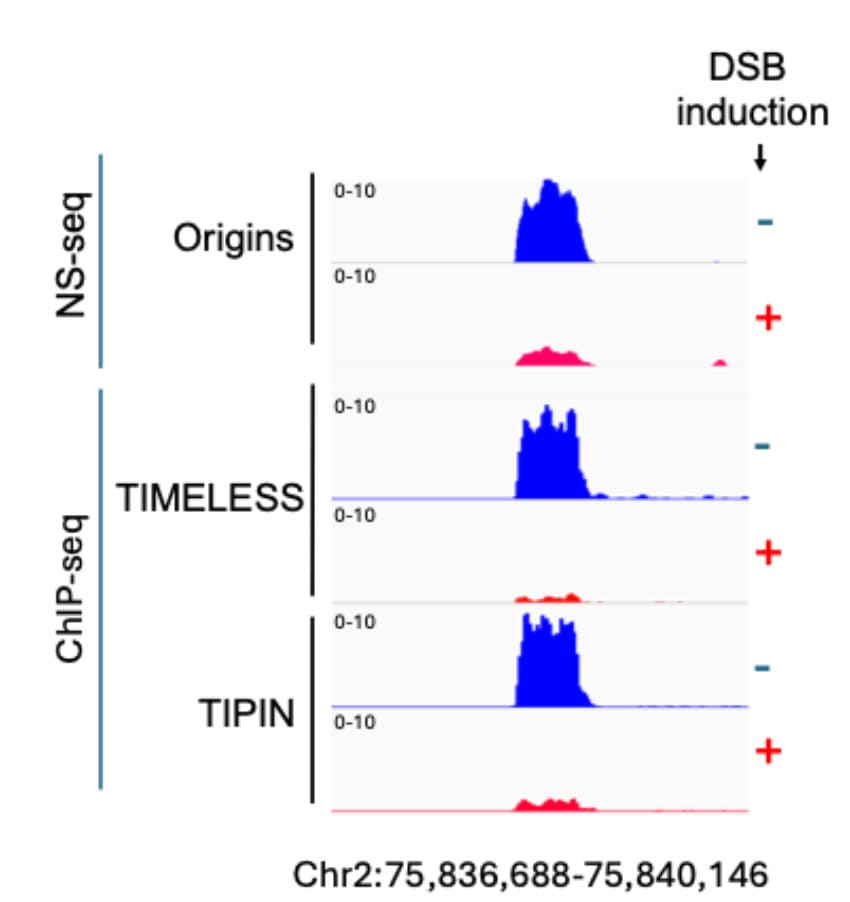
MRD factors TIMELESS and TIPIN are dissociated from replication origins that are suppressed after DSB induction.
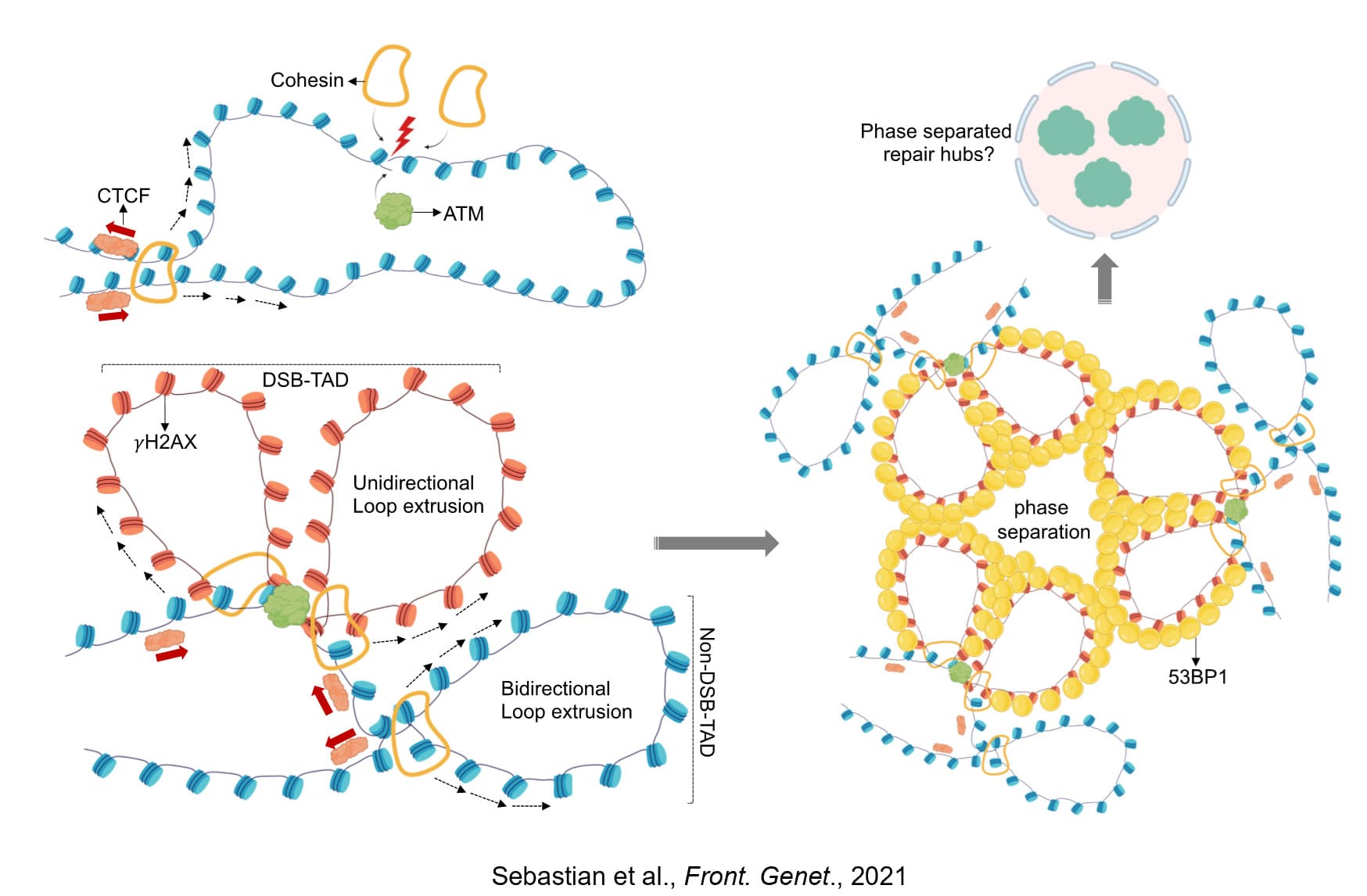
Role of genome architecture in shaping DNA replication and genome stability in damaged DNA.

We identified 53BP1-RIF1 complex as one of the MRD factors that restricts DNA replication specifically in DSB-containing TADs. Since 53BP1-RIF complex is known to associate with DSB-TADs, we hypothesize that both 53BP1-RIF1 complex and cohesin cooperatively regulate DNA replication at DSB sites. To test this hypothesis, we will use genome engineering and advanced imaging. Ultimately, we aim to functionally study genome architecture and its relevance in health and disease.

...

53BP1 may form phase separated repair hubs in the 3D genome with implications for local replication control

Targeting MRD mechanism in cancers with high replication stress

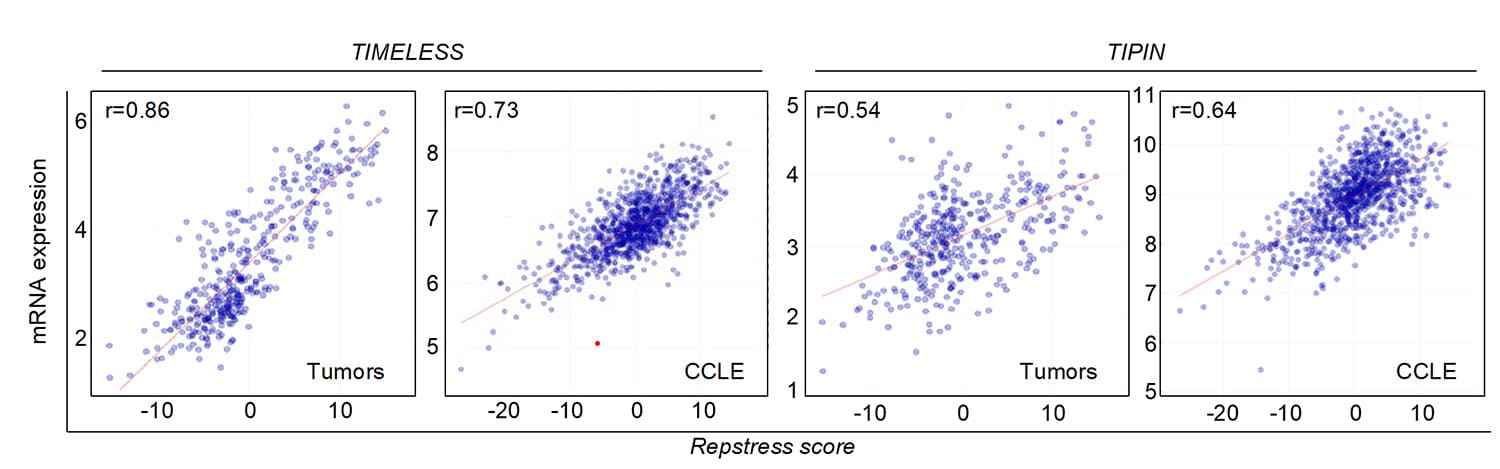
Cancers experiencing high levels of replication stress—such as small cell lung cancer (SCLC)—exhibit strong expression of factors involved in the MRD pathway. Our analysis of cancer cell lines and patient datasets reveals a striking correlation between MRD factor expression and replication stress burden. Therefore, we hypothesize that high replication stress cancers rely on the MRD mechanism for survival. Through integrative analyses, we have identified several candidate genes with elevated dependency scores in these cancers. Our ongoing research is pursuing two complementary strategies. 1) Mechanistic Dissection: We aim to uncover previously uncharacterized crosstalk and pathways through which MRD factors support cell survival under replication stress. 2) Therapeutic Potential: We are evaluating whether these candidate factors can serve as effective therapeutic targets, either as standalone treatments or in combination with DNA-damaging agents. This project seeks to define novel vulnerabilities in replication-stressed tumors and lay the groundwork for more effective, mechanism-informed cancer therapies.

...

Expression of MRD factors correlates with replication stress in cell lines and patients.